

 CLICK TO CALL
Blog
Wrongful Termination Lawyer Warning: Mistakes That Destroy Your Case
January 22, 2026 Leslie Smith

When you've been wrongfully terminated, your first instincts might actually harm your legal case. As a wrongful termination lawyer practicing in Oakville, Ontario, I've seen countless employees unknowingly sabotage their claims through well-meaning but damaging actions. Understanding these pitfalls can mean the difference between a successful settlement and a dismissed case.
The Social Media Trap That Haunts Wrongful Termination Cases
Your social media activity becomes evidence the moment you're terminated. Employers and their legal teams routinely monitor former employees' online presence, searching for content that undermines wrongful termination claims.
Posting about your termination, even vaguely, can backfire spectacularly. Comments like "finally free from that toxic place" or "glad to be done with those idiots" suggest you weren't actually damaged by the dismissal. These posts can be screenshot and used against you in negotiations or court proceedings.
Photos from vacations, parties, or recreational activities during your notice period can also damage your case. If you're claiming emotional distress or inability to work, images showing you apparently enjoying life contradict your position. Even innocent posts about job searching can be twisted to suggest you're not properly mitigating your damages.
The safest approach? Avoid posting anything work-related and consider making your profiles private immediately after termination. Better yet, take a complete social media break until your wrongful termination lawyer resolves your case.
Mitigation Mistakes That Cost You Money
Canadian employment law requires terminated employees to mitigate their damages by seeking comparable employment. However, many people misunderstand this obligation, leading to costly errors that reduce their settlements.
Some employees believe they must accept any job offer, regardless of salary or suitability. This isn't true. You're only required to seek and accept reasonable alternative employment that's comparable to your previous position in terms of compensation, status, and working conditions.
Others make the opposite mistake by being too selective. Turning down reasonable job opportunities without valid justification can reduce your notice period and settlement amount. Courts expect genuine job search efforts, including applying to positions slightly below your previous role if necessary.
Documentation is crucial for mitigation. Keep detailed records of your job search activities, including applications submitted, interviews attended, and positions considered. This evidence protects you if your former employer claims you failed to mitigate properly.
Communication Errors That Weaken Your Position
How you communicate after termination significantly impacts your wrongful termination case. Angry emails or confrontational phone calls with your former employer create evidence of your emotional state and can be used to justify the termination decision.
Many terminated employees feel compelled to defend themselves or demand explanations. Resist this urge. Any communication should go through your wrongful termination lawyer to ensure it doesn't harm your case. Even seemingly innocent requests for information can be problematic if not handled properly.
Similarly, discussing your case with former colleagues can backfire. These conversations often get back to management and can be used against you. Colleagues might also be called as witnesses, and their testimony about your comments could damage your credibility.
The Rush to Sign Documents
Employers often pressure terminated employees to sign releases or settlement agreements quickly. They might claim the offer expires soon or suggest that waiting will result in a worse deal. Don't fall for these tactics.
Any document your employer wants you to sign after termination should be reviewed by a wrongful termination lawyer. These agreements often contain clauses that waive important rights or accept inadequate compensation. Once signed, these documents are extremely difficult to challenge.
Take time to understand what you're signing and ensure you're receiving fair compensation. A few days of review can save you thousands of dollars and preserve important legal rights.
Failing to Preserve Evidence
Evidence disappears quickly after termination. Company emails, documents, and computer files become inaccessible once your access is revoked. Performance reviews, correspondence with supervisors, and records of workplace incidents are crucial for building a strong wrongful termination case.
Before leaving the workplace, save important documents to personal devices or email them to your personal account. However, be careful not to violate company policies or take confidential information that doesn't relate to your employment relationship.
If you've already left without preserving evidence, document everything you remember about the termination circumstances, workplace issues, and relevant conversations. These notes can help your wrongful termination lawyer understand your case and identify additional evidence sources.
Getting Professional Help Early
The biggest mistake terminated employees make is waiting too long to consult a wrongful termination lawyer. Time limits apply to various claims, and evidence becomes harder to obtain as time passes. Early legal advice can prevent many of the mistakes outlined above and ensure you take the right steps to protect your interests.
At Leslie J Smith Law, located at 1540 Cornwall Rd #105, Oakville, ON L6J 7W5, I help clients navigate wrongful termination disputes while avoiding these common pitfalls. Don't let preventable mistakes destroy your case. Contact me at 905-257-7714 or contact us to discuss your situation and protect your rights.
Remember, your actions immediately after termination can significantly impact your case outcome. When in doubt, consult with a wrongful termination lawyer before taking any action that might harm your claim.
Disclaimer: This blog post is provided for informational purposes only and does not constitute legal advice. Every wrongful termination case is unique, and the information contained herein may not apply to your specific situation. The content should not be relied upon as a substitute for professional legal counsel. If you believe you have been wrongfully terminated, please consult with us to discuss the specific facts of your case and obtain advice tailored to your circumstances. Reading this blog does not create a lawyer-client relationship between you and Leslie J Smith Law.
Employment Law Compliance: The True Cost of Getting It Wrong
December 5, 2025 Leslie Smith
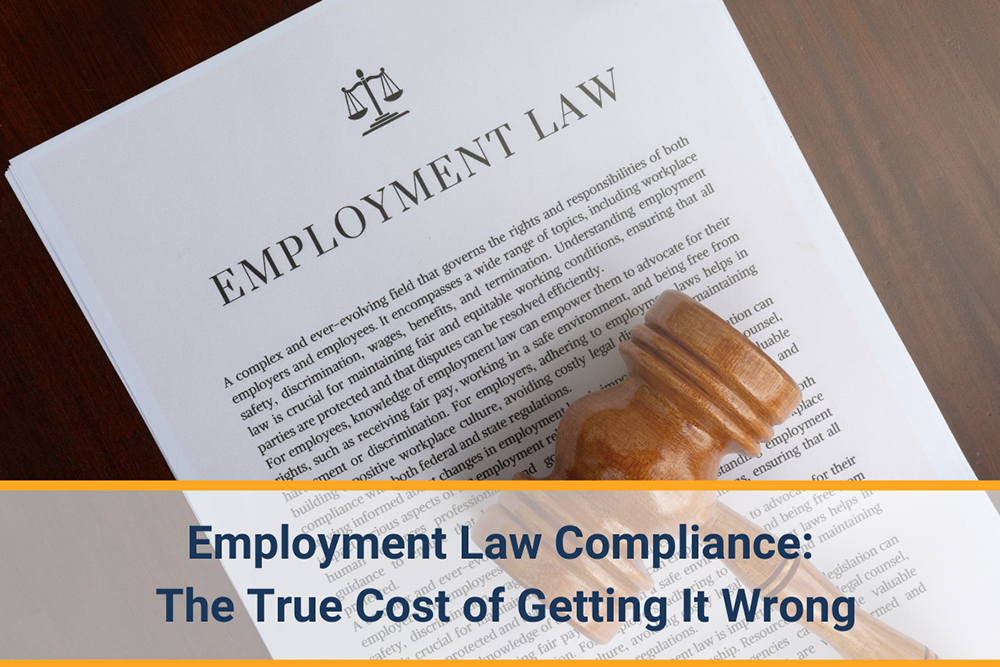
Employment Law Violation Penalties: The Financial Impact
Employment Law Violation Penalties: The Financial Impact
As an employment lawyer practicing in Oakville, Ontario, I regularly witness organizations underestimate the true cost of employment law non-compliance. Many businesses view compliance as an expense rather than an investment. However, the financial impact of getting employment law wrong far exceeds the cost of proactive compliance. Understanding these costs helps organizations make informed decisions about legal risk management.
Employment law violations in Canada carry significant financial penalties that can devastate businesses of all sizes.
- Employment Standards Act violations: $250 to $100,000 per violation
- Human rights violations: $10,000 to $40,000 plus compensatory damages
- Occupational health and safety offenses: $100,000 to $1,500,000 for corporations
- Wrongful dismissal awards: 3 to 24 months of compensation per employee
- Punitive damages for bad faith conduct: $5,000 to $100,000 or more
These penalties represent only direct costs. The Ontario Ministry of Labour issued over $8 million in penalties in 2023 alone. Human rights tribunals awarded an average of $25,000 in general damages per successful claim.
As an employment lawyer, I've seen small businesses face bankruptcy from single employment law violations. Medium-sized organizations can lose years of profits to legal penalties and settlements.
Hidden Costs of Employment Law Non-Compliance
Hidden Costs of Employment Law Non-Compliance
Beyond direct penalties, employment law violations create substantial hidden costs that organizations often overlook.
- Legal fees ranging from $15,000 to $150,000 per case
- Management time diverted to legal disputes
- Productivity loss during investigations and litigation
- Employee morale decline and increased turnover
- Recruitment costs to replace departed employees
- Insurance premium increases after claims
Legal fees alone can exceed penalty amounts. A straightforward wrongful dismissal case typically costs $25,000 to $50,000 in legal fees. Complex cases involving multiple claims can exceed $100,000 in legal costs.
Management time represents another significant hidden cost. Senior executives spending weeks managing legal disputes lose focus on business operations. This opportunity cost rarely appears in financial statements but significantly impacts organizational performance.
Reputation Damage: The Employment Law Cost Nobody Calculates
Reputation Damage: The Employment Law Cost Nobody Calculates
Reputation damage from employment law violations creates long-term financial consequences that extend far beyond immediate penalties.
- Difficulty attracting top talent to the organization
- Customer and client relationship damage
- Negative media coverage and social media backlash
- Reduced competitive positioning in the marketplace
- Investor confidence decline for larger organizations
- Supplier and partner relationship strain
At Leslie J. Smith Law in Oakville, I've counseled clients facing reputation crises from employment law violations. Rebuilding reputation takes years and substantial investment. Some organizations never fully recover from high-profile employment law failures.
Social media amplifies reputation damage exponentially. A single employment law violation can generate thousands of negative online comments. This digital footprint persists indefinitely, affecting future recruitment and business development.
Productivity Loss from Employment Law Disputes
Productivity Loss from Employment Law Disputes
Employment law disputes drain organizational productivity in ways that extend throughout the entire workforce.
- Distracted management unable to focus on strategic priorities
- Employee anxiety and reduced engagement during disputes
- Team disruption when key employees are involved
- Time spent on documentation and legal preparation
- Workplace culture deterioration affecting overall performance
Research indicates that organizations involved in employment law disputes experience 15-30% productivity decline in affected departments. This productivity loss continues throughout the dispute resolution process, which often takes 12-24 months.
Cost-Benefit Analysis: Proactive Employment Law Compliance
Cost-Benefit Analysis: Proactive Employment Law Compliance
Proactive employment law compliance costs significantly less than reactive legal response to violations.
- Annual legal retainer: $5,000 to $25,000
- Policy development and updates: $3,000 to $10,000
- Training programs: $2,000 to $8,000 annually
- HR system improvements: $5,000 to $20,000
- Regular compliance audits: $3,000 to $12,000
Total proactive compliance investment typically ranges from $18,000 to $75,000 annually. This investment prevents violations that could cost hundreds of thousands in penalties, legal fees, and hidden costs.
As an employment lawyer, I've calculated that proactive compliance typically costs 10-20% of reactive legal response expenses. Organizations investing in compliance avoid the devastating financial impacts of violations.
Employment Law Compliance Return on Investment
Employment Law Compliance Return on Investment
Compliance investment generates positive returns beyond avoiding penalties and legal costs.
- Reduced employee turnover and recruitment costs
- Improved workplace culture and productivity
- Enhanced reputation attracting better talent
- Competitive advantage in client relationships
- Lower insurance premiums and risk exposure
- Peace of mind for leadership and ownership
Organizations with strong employment law compliance report 25-40% lower employee turnover. This turnover reduction alone often justifies compliance investment through reduced recruitment and training costs.
Making the Business Case for Employment Law Compliance
Making the Business Case for Employment Law Compliance
Smart organizations view employment law compliance as strategic investment rather than regulatory burden.
- Quantifying potential violation costs and penalties
- Calculating hidden costs of non-compliance
- Demonstrating ROI from compliance investment
- Comparing proactive versus reactive cost scenarios
- Highlighting competitive advantages of compliance
At Leslie J. Smith Law in Oakville, we help organizations develop compelling business cases for employment law compliance investment. Our experience as employment lawyers allows us to provide realistic cost projections based on actual case outcomes.
Contact Leslie J. Smith at 905-257-7714 for expert guidance on employment law compliance and cost management strategies.
Archive
January 22, 2026 | Leslie Smith
December 5, 2025 | Leslie Smith
November 20, 2025 | Leslie Smith
October 19, 2025 | Leslie Smith
September 19, 2025 | Leslie Smith
August 6, 2025 | Leslie Smith

July 17, 2025 | Leslie Smith
June 12, 2025 | Leslie Smith

May 11, 2025 | Leslie Smith
April 8, 2025 | Leslie Smith
March 8, 2025 | Leslie Smith
February 5, 2025 | Leslie Smith

January 25, 2025 | Leslie Smith
January 11, 2025 | Leslie Smith

December 10, 2024 | Leslie Smith

December 5, 2024 | Leslie Smith

November 9, 2024 | Leslie Smith

October 18, 2024 | Leslie Smith
July 14, 2022 | Leslie Smith

April 22, 2022 | Leslie Smith